By Victor ‘Tunde Oso
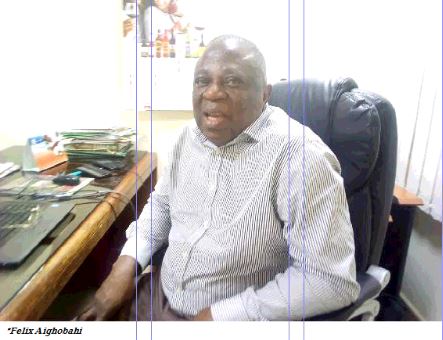
Felix Aighobahi, Sales Director of Euro Global Foods and Distilleries Limited says the real sector, still reeling from the adverse effects of the 2018 Excise duty, face bankruptcies, which could render millions without jobs with the new Value Added Tax VAT. Aighobahi also speaks on the menace of illicit liquor producers, among other issues. Excerpts:
New VAT rate hike against the backdrop of the 2018 Excise duty
Government has to always think deeply before introducing new taxes because it adversely companies in the real sector of the economy. When the Federal Government introduced excise duty in 2018, we tried to enter into dialogue with government several times, which came into nothing.
Stakeholders then, under the aegis of Distillers and Blenders Association of Nigeria (DIBAN), and the Association of Food, Beverage and Tobacco Employers of Nigeria (AFBTE) rejected the 500% increase in excise duty rates on alcohol by government.
Although the Federal Ministry of Finance and the Tariff Technical Committee (TTC) consulted the association on the proposed tariff rate increase, it was not the rate that was agreed upon that was eventually adopted by the Federal Government.
ALSO READ: Analysts dismiss VAT’s impact on stock investment, seek reverse incentive
The excise duty increase almost led to bankruptcies of some of our members and render millions without jobs.
Now, two years after, they have come up with Value Added Tax VAT. Unfortunately, the VAT is coming at the beginning of the year, when consumers are just emerging from Christmas expenditures.
Regrettably, we cannot say we want to pass it on to consumers, so we are again absorbing the cost and it surely is eating into our profit margin.
Local sourcing of raw materials
For your information, Nigerian raw materials are not local or substandard. The Federal Government’s policy perspective 005, which was geared towards improving local raw materials, has been well imbibed by many manufacturers in the country. However, to cut costs and to promote FG’s local content policy, we, at Sona Group embrace sourcing of our raw materials locally.
In fact, I can say emphatically that through local sourcing of raw materials, the manufacturing sector, of which Sona Group is a key member, has been able to increase its contribution to the nation’s Gross Domestic Product GDP. At Sona, we also have a corporate policy of backward integration.
Nearly everything we need to produce world standard goods and products are here in this country, so, we have to use them. Is it molasses (sugar cane), sorghum, cassava and others; every other thing, even in the ethanol business?
For example, we have a grain processing sister company: Food and Agro-Allied Company that processes our raw materials for our Maltonic drink. The company even supplies other big companies in the food and beverages industry. We are all enjoying the local content policy of the Federal Government.
With global situation today, we are left with little choice than to look inwards for our raw materials. I am happy to tell you that today over 70% of our input are locally-sourced.
This has equally attracted foreign companies to be sending local purchasing orders (LPOs) to us for business transactions.
These are some of the aspects that should make the FG to try to encourage us by granting us several incentives in terms of waivers
Quacks in the industry and illicit liquor producers
The ethanol industry has a body under the Manufacturers Association of Nigeria (MAN) that has been fighting this menace. However, our products at Euro Global, by dint of our hard work are difficult, almost impossible to copy or adulterate.
We are also helped because we source our raw material locally and have, as one of our subsidiaries, a packaging company. The company fortifies our products against counterfeiting. Similarly, government may not be able to totally eradicate local liquor producers.
Nigeria native liquor like ogogoro are okay for as long as they are taken and dispensed as native drinks. However, what I object to is unscrupulous people bottling, giving it all kinds of names and passing it off as another drink, even when it has not gone through any refining and processing.
This is what is criminal and not acceptable because the normal prescriptions and content quality and quantity are not indicated.
The risk level of taking these kind of drinks is high and we know the respective regulatory agencies are after them and bringing them to justice.
These adulterators are bringing the industry into disrepute and causing harm to the unsuspecting consumers. In situations like this, the Nigeria Police and regulatory agencies like the National Agency for Food and Drug Administration and Control (NAFDAC), Standards Organisation of Nigeria SON, collaborative effort should work hand in hand to fight these adulterated and fake alcoholic products
Health hazards of liquor
This is what I am talking above and we have not been able to resolve. What I will want to advise consumers is to be very careful in their choice of drinks and beverages and make sure that they patronize products of those well-known industries.
A consumer should look carefully at those products, which indicates the content alcoholic level, quantity, quality of what are in the products and be guided before consumption.
Genuine products will indicate on the label or bottle or container, what the product is made of. There are lots of consumer education out there and consumers need to know what they are buying. They should check the product and source of where they buy what they consume.
Our products: the wine, beverages and alcohol have been manufactured to international standards, so it has all the safety rules on the label and container and under 18 individuals are warned not to take them, as the case may be.
Many consumers of these products find it difficult to spot the bad ones from the good brands. However, there are still easy and useful ways to identify inferior products. People need to remember “the 4 Ps” when buying any drink content: these are: Place, Price, Packaging and Product.
(a)Place: Make sure you buy from a reputable supermarket, off licence or shop. (b) Price: If a deal looks too good to be true, it most probably is adulterated. (c) Packaging: Look out for: 1. poor quality labelling, including things like spelling mistakes. 2. Properly sealed caps. If the seal is broken, don’t drink it.
Even if it is not illegal, it could have been tampered with; and 3. Fake bar codes. If you have an app on your mobile that scans bar codes, scan it and see if it is listed as the correct product. (d) Product: Look out for fake versions of well-known brands and be wary of unusual brand names you haven’t seen before. If any alcohol tastes or smells bad, don’t drink it.
Challenging operating environment
Infrastructure is the bedrock of the economy. A well-developed infrastructure is not only essential for attracting foreign investment, it is vital for long-term growth.
The first business challenge we face in this country is infrastructural challenge. We lack the basic infrastructure and logistics to support business growth; so, one is tasked to think strategically in order to stay ahead of competitors. In fact, the deplorable state of Nigerian roads can best be described as a national shame.
We are faced with various challenges like high-interest rates, rising operations cost and stringent government regulations. Indeed, poor transportation infrastructure to me, as a salesman of over 30 years, is the most significant challenge facing manufacturers, which must be addressed.
We will continue to appeal to government to continue to improve on our road infrastructure. Our losses on Nigeria’s bad road network alone have gone up to 30%, whereas by international standards, it is not supposed to be above 0.5% maximum. We, as a company have continued to bear it because this is our country and we dare not pass on these losses onto our consumers.
Focus on West Africa markets
Taking advantage of the West African market is our parent company: Sona Group’s aim and Euro Global is not any different. Our products are being consumed in the West African sub-region.
For instance, we have branches from Republic of Benin to Ghana and the movement of our goods to these countries is by road. However, the recent border closure has put a brake on this for now.
We appeal to government to weigh its options very well because if it said it wants to encourage exports, it should find a way to accommodate companies like ours and grant us waivers and help us with favourable shipment policy.
We have created a huge market at the West African coast and our consumers are waiting for our products at those end. Our products are of international standards, which is why they are very much acceptable in the ECOWAS countries.
We have been involved in creating brands that would add great values to our consumers and make impacts in the labour market by employing as many hands as possible to join government efforts in tackling unemployment.
Personally, as a salesman of close to 40 years experience, I want to urge the young generation to focus on job expertise first and not the emolument or what they call salaries because when you are good at what you do, money will roll in.
The post VAT: Fresh hike can bankrupt companies — Aighobahi appeared first on Vanguard News.
by Rasheed Sobowale via Vanguard News https://ift.tt/2TamX6i Best Known Member of the Cabinet Wikipedia
Comments
Post a Comment