In late December China informed the world about COVID-19 that was ravaging Wuhan. While COVID-19 was ravaging China, some countries prepared for possible outbreak in their countries, others just watched, waited and hoped it would not cross into their borders.
It turns out that those who anticipated it and prepared a response in advance have been most successful in containing the disease.
Perhaps, in hindsight, Nigeria’s preparedness and emergency measures have shown to be grossly inadequate. Our current intervention measures are even, surprisingly, less aggressive.
The terrible thing with COVID-19 killer virus is that it is insidious: majority of the people infected do not show any symptoms, yet they continue to transmit the virus to other people. For everyone, the only way to know that you’re infected is to get tested.
But, in Nigeria with about 200 million people and its vastly traveled population that’s always on the move, it is pretty hard to believe that there are only five laboratories that perform the COVID-19 testing, for the entire country. Just five laboratories!
This is why it is hard for most to believe that we only have 91 confirmed cases. Limited testing helps to spread to infection. If we don’t test aggressively, it helps the disease to spread aggressively!
Two urgent things are addressed here:
COVID-19 TESTING! TESTING!! TESTING!!!
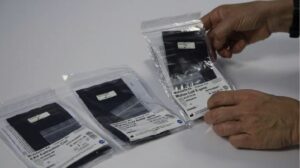
The most urgent intervention for government at this time in our COVID-19 response effort must be scaling up testing centers to all states and local governments across the country. Countries that have aggressively pursued testing have shown most progress in containing the spread of the pandemic in their population.
ALSO READ: COVID-19: Isolation can save you from impending embarrassment
a) South Korea has emerged as a sign of hope and a model to emulate. While the disease ravaged Wuhan China, the Korean government mobilised their diagnostic companies, and within a week the first COVID-19 test was approved in Korea.
A couple of weeks later, South Korea opened up elaborate COVID-19 community testing centers that people could drive in and go through, made it all free and once they identified people, they put them into quarantine. By March 17, 2020, the country reported only 74 new cases, down from 909 at its peak on 29 February.
The first case of COVID-19 was confirmed in South Korea on January 20. As of March 27, 376,000 people had been tested in the country of 50 million.
In Nigeria, we do not need drive-throughs; we know they are in towns and villages, and can be easily reached with point-of-care COVID-19 testing centers in community settings.
b) Some countries are making extensive progress in their catch-up effort. In recent days, Spanish health authorities have been urgently distributing nearly 650,000 rapid testing kits to frontline medical staff and residential homes for older people.
As Nigeria takes increasingly drastic steps to isolate, quarantine and restrict the movement of citizens, in the long-term, the pandemic will likely demonstrate that a country without safety nets, truly local healthcare manufacturing companies, and robust healthcare system, is no longer tenable.
Perhaps, since COVID-19 does not respect positions or lack of it, leaders will have to answer tough questions about why the country was caught unprepared.
We still have a chance to do it right through massive decentralised testing. COVID-19 Testing! Testing!! Testing!!!
SOCIAL SAFETY NETS
This past week demonstrated the power of collective effort of Nigerians to effectively confront a common enemy. Several public and private sector institutions rolled out their COVID-19 intervention plan: the Central Bank of Nigeria with a consortium of banks, NNPC with a consortium of oil industry captains, business moguls – Alhaji Aliko Dangote and Herbert Wigwe – rallied other industry players. UBA mobilised massive funding resources to support national and pan-African COVID-19 intervention, and a host of others.
In deploying these resources, we must be cognisant of the adverse impact of this situation on majority of Nigerians who lack any social safety net. Lagos State government has mobilised food items for distribution to its residents; public and some of the mobilised private sector funds should go to provide social safety programmes, like distribution of food items.
Call to action is now: what would post-pandemic Nigeria look like? How will our social behaviour change? How will our healthcare system change? How will our governments at all levels change? How will all other sectors of the economy change?
The greatest fear is that nothing changes in Nigeria post-COVID-19!
The post COVID-19: Testing!Testing!! Testing!!!: Where we are and how we got here appeared first on Vanguard News.
by Rasheed Sobowale via Vanguard News https://ift.tt/3dItvS0 Best Known Member of the Cabinet Wikipedia
Comments
Post a Comment