
How Liberian war depleted Nigeria’s maritime capabilities

How Liberian war depleted Nigeria’s maritime capabilities

Liberian war

Stories by Godwin Oritse

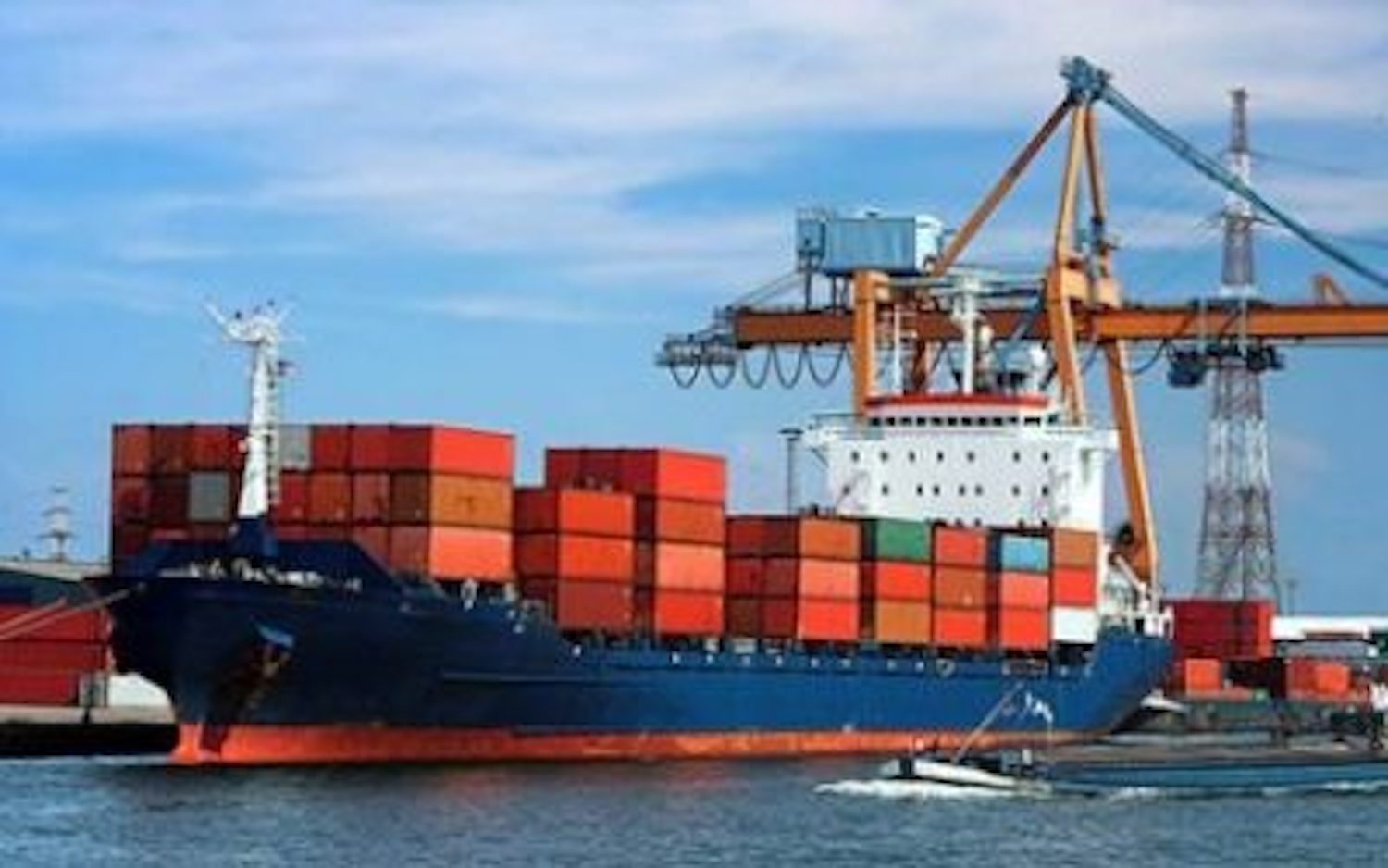
IN a bid to maintain peace in the African continent, Nigeria lost most of its maritime security platforms to prosecute the 14-year old war in Liberia.

Speaking to some maritime journalists in Lagos the Director General of the Nigerian Maritime Administration and Safety Agency, NIMASA, Dr Bashir Jamoh, said that at the end of the war, virtually all the maritime platforms that the government took to that country to prosecute the war were lost adding that Nigeria had to start from ground zero in acquiring new platforms.


He explained that it was the depletion of these platforms that made the ex-President Olusegun Obasanjo led government to set up the Presidential Implementation Committee on Maritime Security and Safety, PICOMSS, to acquire new platforms for the purpose of securing the nation’s maritime space. Explaining further, Jamoh said that at the end of the life of PICOMSS, these platforms were again shared with the Nigerian armed forces thereby bringing NIMASA almost to ground zero again.

READ ALSO;Edo COVID-19 frontline workers to get outstanding allowance

He disclosed that at the end of PICOMSS, the aircraft were given to the Nigerian Air Force, the vessels went to the Nigeria Navy while the Armoured vehicles went to Army and Police.

The post How Liberian war depleted Nigeria’s maritime capabilities appeared first on Vanguard News.


by Urowayino Jeremiah via Vanguard News https://ift.tt/2VynaBf Best Known Member of the Cabinet Wikipedia

Comments

Popular posts from this blog

COVID-19: Kano overtakes FCT with total confirmed cases, records 80 in 24 hours

By David Royal Kano state on Thursday overtook the Federal Capital Territory, Abuja, with total confirmed cases of COVID-19 after recording 80 cases in 24 hours, bringing the total number of confirmed cases in the state to 219, while Abuja has a total of 178. The Nigeria Centre for Disease Control (NCDC), Thursday, announced that 204 new cases of coronavirus (COVID-19) have been reported in the last 24 hours, bringing the total number of confirmed cases in the country to 1932. NCDC also announced that seven more fatalities were recorded, bringing the total number of deaths to 58. The NCDC, in a tweet at about 11:50 p.m. on Thursday, said of the 204 new cases,   80 were recorded in Kano state, 45-Lagos, 12-Gombe, 9-Bauchi, 9-Sokoto, 7-Borno, 7-Edo, 6-Rivers, 6-Ogun, 4-FCT, 4-Akwa Ibom, 4-Bayelsa, 3-Kaduna, 2-Oyo, 2-Delta, 2-Nasarawa, 1-Ondo, 1-Kebbi. Thursday’s 204 new cases are the highest reported in a day since the outbreak of the pandemic in February. READ ALSO: COVID-19:...

The anatomy of EndSars protests as an incomplete revolution (1)  

By Douglas Anele Supposing an alien from another planet or solar system visits the earth with capacity to rank the various races of human beings according to their contributions to civilisation particularly in the last six hundred years or so, that alien would perhaps place the black race at the lowest grade. And because Nigeria contains the greatest concentration of black people in the world (one in every four black persons is a Nigerian according to one estimate), a race that worked with European and Arab enslavers to sell their own people like commodities and shamelessly adopted the bizarre religions of their oppressors, it is probably not out of place to assume that that may be the reason the country has been retrogressing for decades. The history of denigrating black people is long and heart-wrenching. Not only do the scriptures of Abrahamic religions contain passages that dehumanise black people, philosophers as enlightened as John Locke, David Hume, Immanuel Kant and G.W.F. ...

10-kilometre walk in rememberance of Bruce Mayrock (1949 – 1969)

By Chike Anyaonu I got to know about this name, Bruce Mayrock, some four years ago through Barrister CHUDI Ofodile’s book titled The Politics of Biafra: and The Future Of Nigeria and published by Safari Books Limited, Ibadan in 2016. Ever since then, I have been trying to dig deeper and deeper into the archives to learn more about this young altruistic, dynamic and benevolent personality. An enigma of sorts, for that matter. Ofodile had, in chapter seven of his book, cited Bruce as one of “Biafra’s non- Igbo actors”, those who participated in one way or the other to fight the cause of the ill-fated Republic of Biafra that were not of Igbo origin. One of them who is still alive today is Wole Shoyinka. Though this write up is a kind of joint tribute to all of them, Bruce Mayrock, for me, deserves a special and everlasting mention. He was not an African, but a citizen of the United States of America. So what concerned a 20-year-old university student   in America with what ...