By Tayo Ogunbiyi
THERE is a saying that “a wealthy nation is a healthy nation”. This assertion is anchored on the belief that a healthy population contributes immensely to the socio-economic growth of any society.
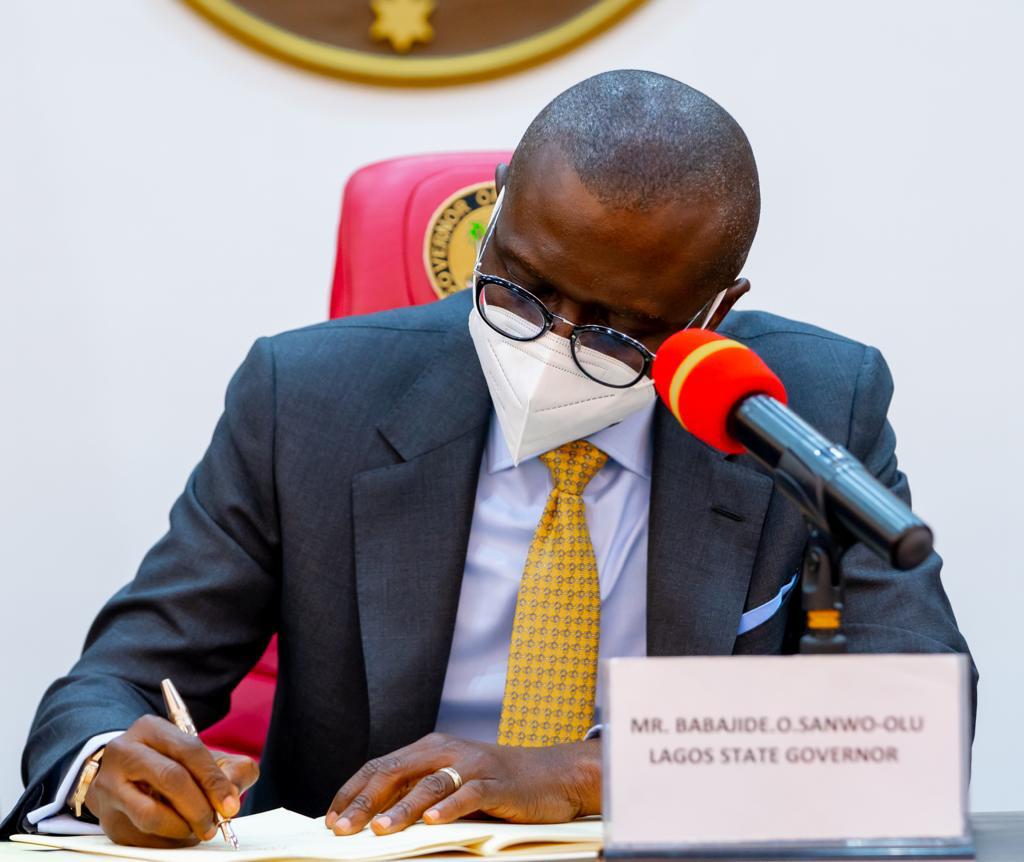
This is why one can only but commend the Babajide Olusola Sanwo-Olu administration in Lagos State for making health and environment one of its cardinal programmes as captured in T.H.E.M.E.S(an acronym for the administration’s strategic development agenda, namely: Traffic Management and Transportation, Health and Environment, Education and Technology, Making Lagos a 21st Century Economy, Entertainment and Tourism and Security and Governance) developmental Agenda.
In the last two years, the administration has invested immensely in the upgrade of public health facilities to enhance access to quality healthcare. At the centre of the state’s public health policy is the provision of unhindered access to healthcare delivery without financial constraint to the residents. The commissioning of three Mother and Child Centers, MCCs, at Eti-Osa, Igando and Badagry amply demonstrates the administration’s resolve to enhance residents’ access to healthcare. The fourth MCC, located in Epe, has been completed and will be commissioned in the coming weeks.
Similarly, the roadmap for the comprehensive upgrade of infrastructure in the state-owned health facilities began last year, following the approval of the plan by the executive council. The infrastructure roadmap is being executed in phases with the primary goal of revamping health facilities across the state’s primary, secondary and tertiary healthcare system. The overhaul is part of the strategy to build a resilient healthcare in Lagos and increase residents’ access to quality universal health coverage.
The renewal effort, which is being carried out in short, medium-and long-term bases, would bring about fit-for-purpose healthcare facilities that would raise the capacity of government to respond to contemporary and future health challenges.
The state’s ongoing public health facilities renewal drive also include improved efficiency for physical maintenance, ease of movement, low carbon footprint, low energy consumption, infection prevention and control as well as staff and patient comfort. The restoration programme is also designed to address issues of design errors, drainage, patient flow, staff flow, water collection, infection prevention, energy and ventilations.
[ALSO READ] IPOB has no plans to attack Lagos — Nnamdi Kanu reiterates
Government has renovated and remodelled the Mainland Hospital in Yaba with future plans of making it an Institute of Research for Infectious Disease. It has also completed the remodelling and upgrading of Apapa General Hospital, just as the Harvey Road Health Centre, Ebute Metta Health Centre, Isolo General Hospital and the General Hospital, Odan Lagos are all undergoing different phases of renovation. All of these are part of the efforts to make health accessible to Lagosians.
It is important to emphasise that the health facilities’ upgrade is being done in a sustainable way to ensure that it would take years for major repairs to be done, except the statutory maintenance by the hospital management as well as the Lagos State Asset Maintenance Agency, LASIAMA.
As part of the Sanwo-Olu administration’s ‘Greater Lagos’ agenda, the construction of new hospitals to bridge noticeable gaps in access and services in the health sector has also begun. This is in tandem with the determination of the current administration to achieve the goals set in the Health and Environment pillar of its T.H.E.M.E.S agenda.
Hence, government has commenced the construction of a 280-bed General Hospital in Ojo, 150-bed New Massey Street Children’s Hospital, while the Governor has also approved the construction and equipping of 1,500-bed Psychiatric Hospital and Rehabilitation Centre at Majidun in Ketu Ejinrin.
The prototype of the new, remodeled and upgraded healthcare infrastructure in the state were planned to conform with key elements of global standards health facility designs such as natural light/ventilation, sustainable energy, patient flow, infection prevention, noise prevention, flood prevention, identifiable standout visual features as well as scalability and modular design for expansion.
Earlier, the construction of a four-storey Faculty of Basic Medical and Clinical Sciences Office Block at the Lagos State University College of Medicine, LASUCOM, was completed, while plans have also been concluded for the renovation and upgrade of some facilities at the Lagos State University Teaching Hospital, LASUTH. This is in line with government’s medical infrastructure blueprint strategy for the tertiary health facilities.
Also, in partnership with the private sector, government has completed and handed over an oxygen plant at the Mainland and Gbagada General Hospitals. The Triage and Oxygen Centres in 10 locations across Lagos have also been delivered. In order to enhance staff welfare, the construction of a 24-unit Doctors’ and Staff Quarters in Gbagada General Hospital has equally commenced.
Work has also begun on the blueprint designs for Comprehensive Health Center, Primary Health Center and Health Posts as part of the move to rejig their operations and service delivery. This will, no doubt, significantly help in adding bed capacity to Lagos State’s healthcare infrastructure.
As earlier affirmed, the promotion and protection of the health of Lagos residents undoubtedly has a positive impact on social development and quality of life of citizens. This explains government’s investment in the greenfield medical infrastructure projects to prevent issues noticed in health infrastructure in the State. It is expected that all issues bedeviling medical health infrastructure across the state will disappear when the medical infrastructure blueprint strategy is fully implemented.
The continuous improvement in quality of health service in the state is a core mandate of the Sanwo-Olu administration and the government is uniquely positioned to utilise available resources to actualize this goal. With the ongoing refurbishment and roll out of a new infrastructure blueprint, the medical infrastructure landscape of Lagos would look completely different, thus moving the state a step closer to achieving universal health coverage. Perhaps, more importantly, the medical infrastructure blueprint agenda will help address the issue of brain drain, medical tourism and patient welfare.
It is also essential to draw attention to the state’s response to the Coronavirus, COVID-19, which has been commended locally and globally, as it helped to prevent the pandemic from spreading more rapidly across the state and also from wreaking havoc on the entire country. The response strategy put in place by the government efficiently curtailed the pandemic and limited fatalities. EKO TELEMED, a tech-driven platform through which the government managed the spread of the virus, yielded efficient results in breaking the cycle of community infection.
In order to prevent the resurgence of the pandemic, government has begun the deployment of EKO TELEMED in the management of in-bound international travellers from high burden countries. The tech-driven platform would be used to monitor movement and treat infected travellers.
The Sanwo-Olu administration has, no doubt, demonstrated that the restoration of public health facilities remains vital in its ‘Greater Lagos” Agenda. It recognises, and rightly so, that health is wealth and this explains its numerous innovative and people-centered schemes that are carefully designed to change the face of public health in the state.
On the whole, it is heart-warming to note that the current administration in Lagos State is working tirelessly towards attaining a sustainable health care delivery system for the residents.
Ogunbiyi is Deputy Director, Public Affairs, Ministry of Information and Strategy, Alausa, Ikeja.
The post Lagos and the revitalisation of public health [opinion] appeared first on Vanguard News.
by Emmanuel Okogba via Vanguard News https://ift.tt/2RcgMR5 Best Known Member of the Cabinet Wikipedia
Comments
Post a Comment